How Dubai Doctors Communicate With Diverse Patients
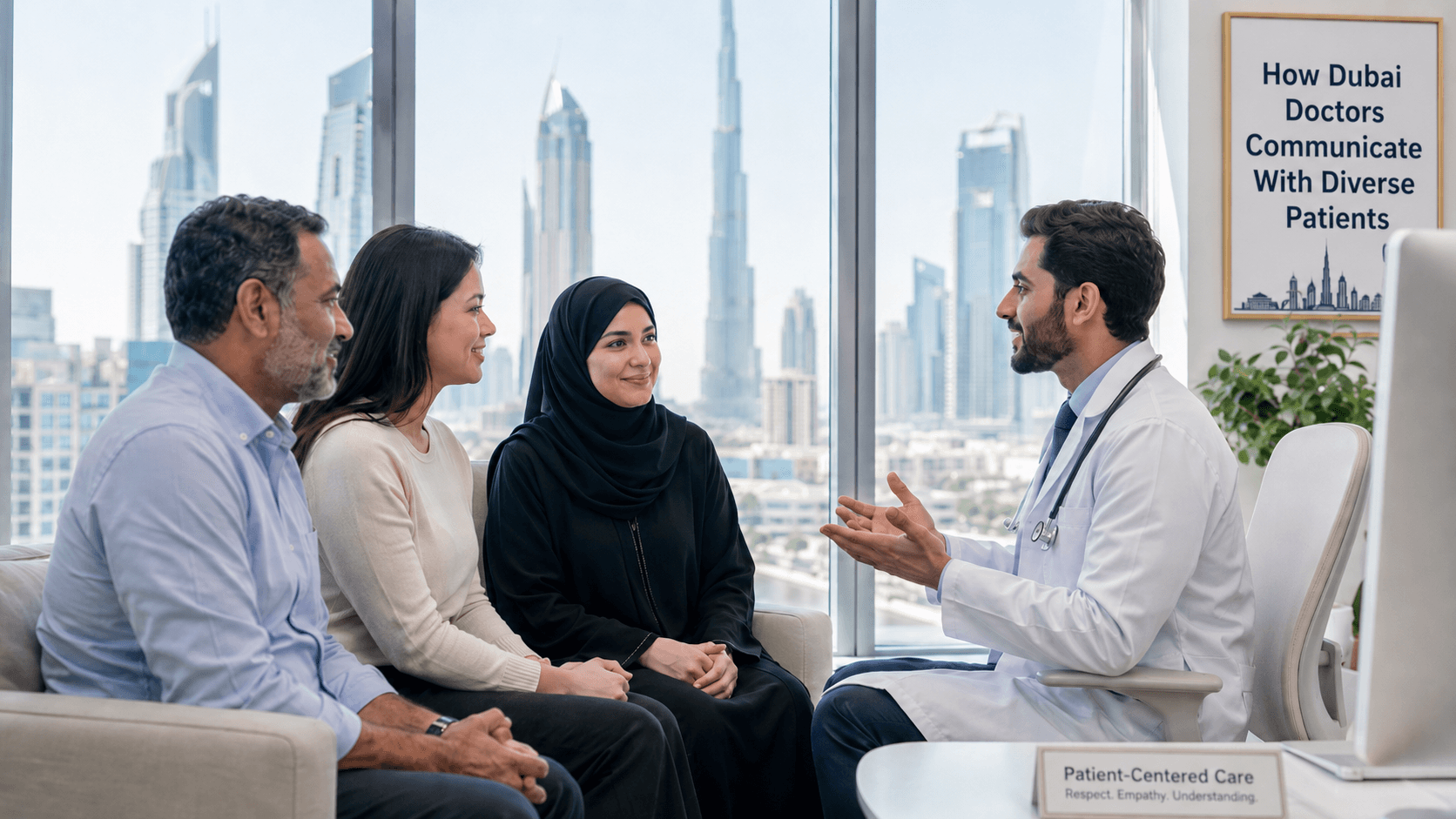
In Dubai, a doctor’s job is not only to diagnose. It is also to decode. A patient may describe pain in basic English. Another may bring a family member to explain symptoms. Someone else may avoid direct eye contact out of respect, while another expects the doctor to explain every treatment option in detail. This is everyday healthcare in Dubai. The city’s multicultural population changes how doctors communicate because patients do not all share the same language, health expectations, or decision-making styles. Good communication in Dubai healthcare means more than speaking clearly. It means noticing when a patient is confused, when a family member is answering too much, when insurance rules are affecting care, and when medical advice needs to be explained in simpler terms.
Why Dubai’s Patient Mix Changes the Consultation
Dubai’s healthcare system serves Emiratis, long-term residents, workers, tourists, business travelers, and expat families from many regions. This creates a consultation style that is very different from cities with a more uniform population. A Dubai doctor may need to adjust communication based on:
The patient’s first language
Their comfort with medical terms
Their insurance network
Their cultural view of illness
Their family’s role in decisions
Their preference for male or female clinicians
Their understanding of preventive care
Their ability to use digital health apps
A Dubai-based study on family physician communication found that barriers included time pressure, language and cultural differences, and issues related to explanation and understanding. That matches what many patients experience in real clinic settings.
Family Communication Becomes Part of Care
In Dubai, family involvement is common in medical decisions. A patient may want a spouse, parent, adult child, or sibling to join the consultation. This can be helpful, especially when the patient is elderly, anxious, or not confident in English. But it can also create challenges. Sometimes, family members answer before the patient speaks. Sometimes they translate only part of the message. In sensitive cases, the patient may not want to discuss everything openly. Doctors need to manage this carefully.
Situation | Better Doctor Communication |
Family member speaks for the patient | Ask the patient directly first |
Patient looks uncomfortable | Offer a private discussion |
Family translates medical advice | Confirm with simple repeat-back |
A major treatment decision is needed | Explain options clearly to everyone |
Sensitive symptoms are involved | Ask about privacy preference |
This keeps the patient at the center while still respecting family culture.
Consent Needs Clearer Explanation
Consent is not just a signed form. Patients need to understand what they are agreeing to. In Dubai’s multicultural healthcare environment, doctors may need to explain procedures, risks, costs, insurance approvals, and alternatives in simpler language. This is especially true for surgery, maternity care, dental procedures, cosmetic treatments, mental health care, and chronic disease management.
Non-Verbal Cues Are Read More Carefully
In Dubai, body language can be easily misunderstood because patients come from different cultural backgrounds. For one patient, direct eye contact may show honesty. For another, it may feel too intense. Some patients speak loudly when worried. Others become quiet when they are confused. Some prefer more personal space, while others expect a warmer conversational style. Doctors who work with diverse patients learn not to jump to conclusions. A quiet patient is not always uninterested. A patient who avoids eye contact is not always hiding something. A patient who brings a family member is not always unable to make a decision. The safest approach is simple: ask, do not assume.
Front Desk Communication Matters More Than People Think
Many communication problems occur before the doctor enters the room. Patients may be confused about:
Insurance coverage
Co-payments
Specialist referrals
Required documents
Appointment timing
Lab test approvals
Follow-up charges
Pharmacy process
In Dubai, where insurance networks and clinic systems vary, front-desk clarity affects the entire patient experience. A patient may blame the doctor when the real issue is unclear billing or insurance explanation. Good clinics train reception teams to explain fees, waiting times, insurance status, and next steps in simple language.
Technology Helps, but It Cannot Replace Human Explanation
Telemedicine, online booking, digital reports, health apps, and AI translation tools are now part of Dubai healthcare. They help patients book faster, share reports, and receive reminders. But digital tools do not solve every communication problem. AI translation can help with basic appointment messages, but it can be risky for medication dosage, allergies, consent, pregnancy symptoms, or emergency warning signs. A 2025 public health study found that language barriers, communication quality, and cultural alignment can shape patients' perceptions of their involvement in treatment decisions. So the best approach is a hybrid one: use technology for access and convenience, but keep human confirmation for medical decisions.
Conclusion
Dubai’s multicultural population shapes how doctors communicate throughout the care continuum. Doctors need to ask better questions, explain treatment more clearly, respect family dynamics, avoid assumptions, and confirm that patients understand the next step. This is not just about being polite. It affects diagnosis, treatment safety, medication use, follow-up care, and patient confidence.
Frequently Asked Questions
How does Dubai’s multicultural population affect doctor communication?
Doctors often need to adjust language, tone, explanations, privacy expectations, and follow-up instructions because patients come from many countries, cultures, and healthcare backgrounds.
Do doctors in Dubai usually speak English?
Yes, English is widely used in private healthcare. Many clinics also have multilingual doctors and staff, but language availability depends on the clinic, specialty, and doctor schedule.
Can I ask for a doctor who speaks my language in Dubai?
Yes. Many clinics allow patients to request doctors by language, gender, or specialty. It is better to ask before booking so the clinic can match you with the right provider.
Are AI translation tools safe for medical consultations?
They can help with basic communication, but they should not be fully trusted for serious medical information, medication dosage, allergies, consent, or emergency symptoms.
Related Posts

Top Doctors in Dubai: Marina, JVC, Deira & Downtown
Compare Dubai Marina, JVC, Deira, and Downtown Dubai to find trusted doctors, clinics, specialties, insurance options, and better medical care.

Are Doctors Too Expensive in Dubai?
Explore why doctor fees in Dubai feel expensive for many residents, how insurance affects costs, and what patients can do to reduce medical bills.